AnyTalk, 2016
Context
AnyTalk is a cross-platform messenger designed for private communication, targeting users who prioritize data security and connection stability: distributed teams, business users, and a privacy-conscious audience.The product challenge was to combine a high level of data protection with a simple, familiar messaging UX.
Role
Product / UX Designer with elements of design leadership:
- Defined core user scenarios and overall UX strategy
- Aligned user needs, business goals, and technical constraints
- Prioritized features in collaboration with the Product Manager
- Facilitated communication between design, engineering, and stakeholders
- Contributed to resource planning and delivery timelines
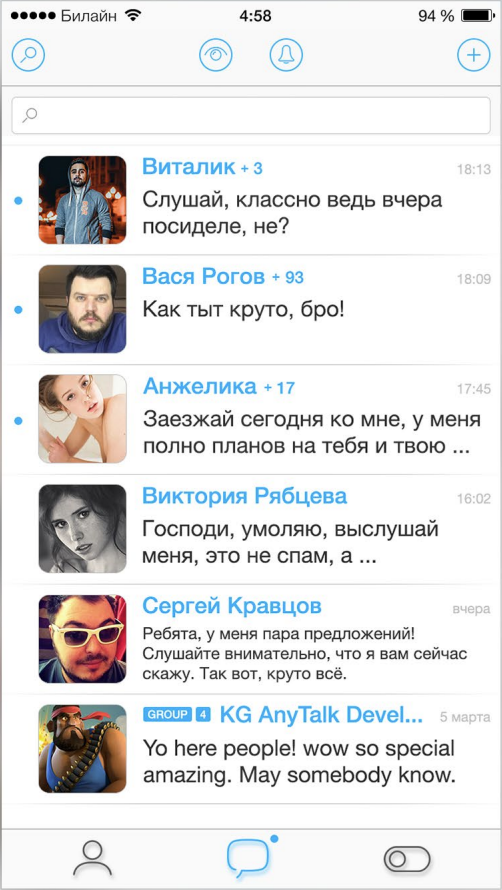
Chat list with group chats
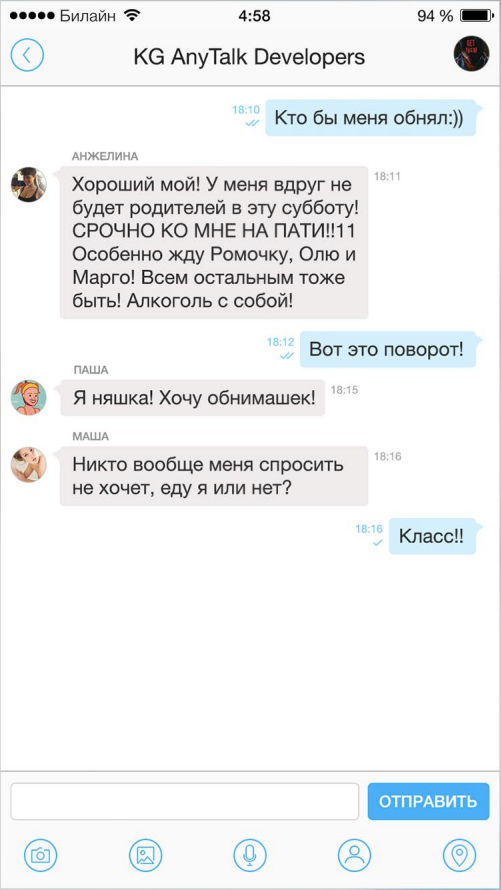
Group chat
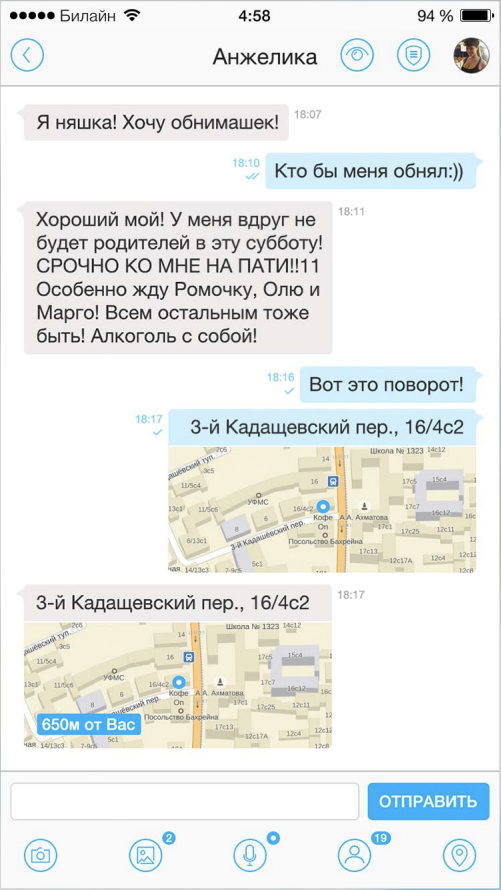
Live location sharing 2016!
Approach
1. Research
At the outset, I conducted an in-depth analysis of native messaging UX patterns to lower the entry barrier and ensure interface predictability.
This included:
- Competitive benchmarking of market leaders
- Analysis of established chat, calling, and group communication models
- Identifying user expectations for secure messengers
Special attention was given to Telegram as a key competitor at the time — its patterns set a high standard for speed, interface clarity, and user control.
2. UX Concept
One of the core challenges was rethinking complex functionality around cryptographic key exchange.
- Simplified the interaction model for key management
- Redesigned security status indicators
- Made chat states transparent and easily scannable
- Removed unnecessary technical terminology from the user layer
As a result, security felt like an inherent product property rather than a separate, complicated process.
3. Key Features
- End-to-end encryption (AES-256, ATLS, SSL) for private and group chats
- Private and group video calls, redesigned using best-in-class UX practices that remain relevant today (low-friction call entry, clear connection states, stable group scenarios)
- Watch-Together synchronous video viewing
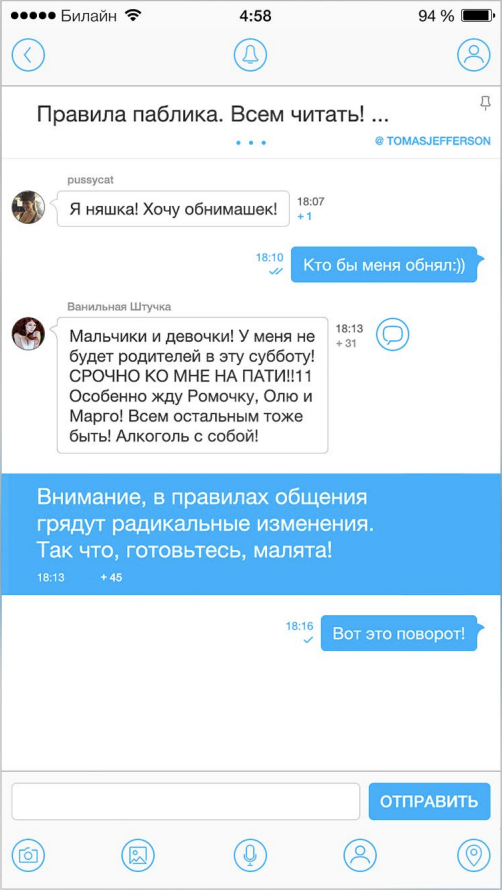
Pinned messages
* 2016!
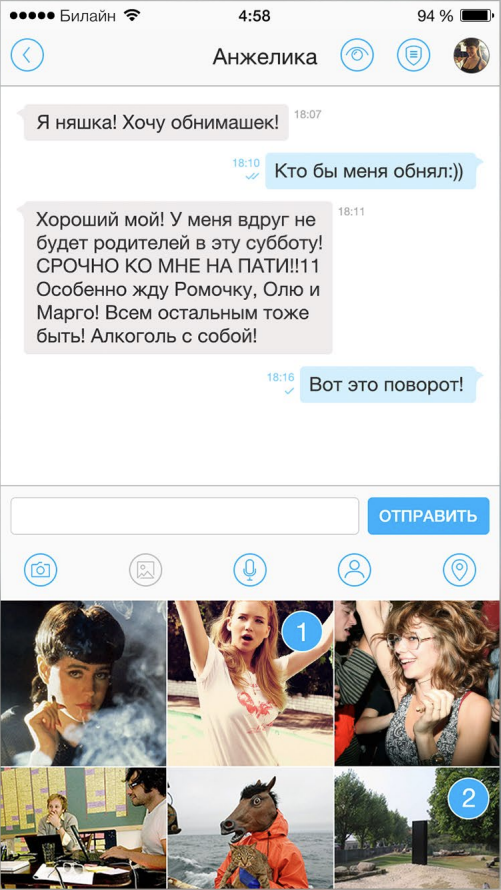
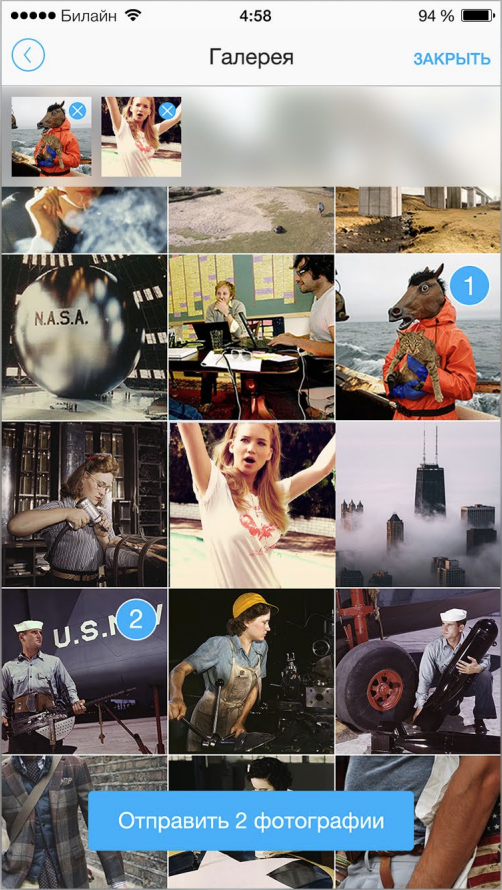
Media handling optimized for usabilityBottom States
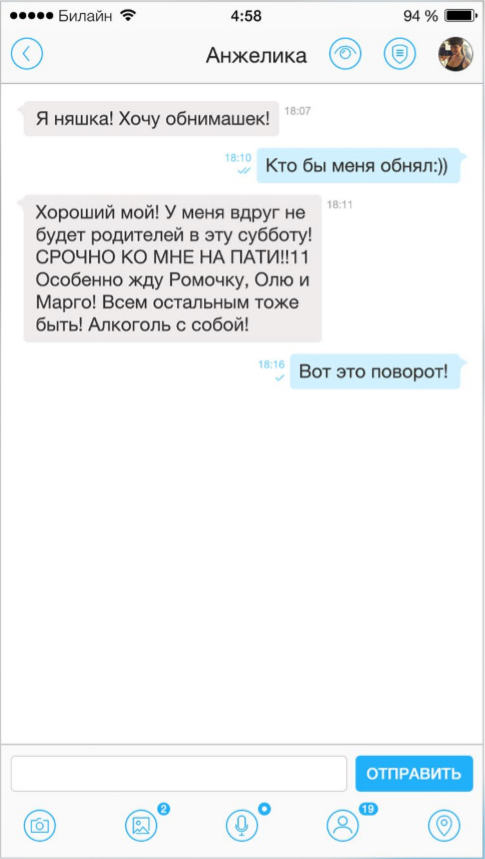
Bottom-first interaction model* 2016!
Watch-Together: Synchronous Video Viewing
Our team took the feature from idea and pitch to release in 2016 — effectively six months before similar scenarios began appearing in major products. The market later validated the demand for this format.

AnyVideo streaming, 2017

Watch Together, Meta* 2018
* restricted in Russia

YouTube Premier, 2019

Amazon Theatre, 2020

Apple Screen Share, 2021
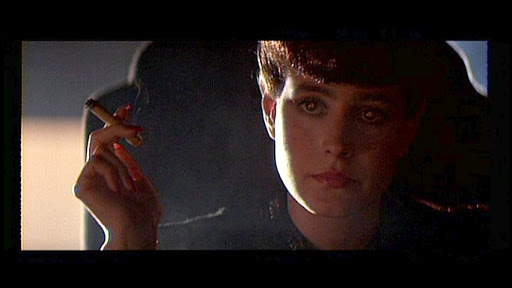
The flow was intentionally simple:Drop a link into the chat → start synchronized playback → the session becomes a pinned, joinable message that anyone can enter at any time.
My Key Contribution
I initiated and designed the synchronous video viewing feature.
At the time, this was not a trend — it was a hypothesis that messengers would evolve into spaces for shared digital experiences, not just text communication.
Product Concept
We aimed for maximum simplicity:
User sends a link → starts synchronized playback → the session is pinned in the chat as a joinable message.
No complex rooms. No setup friction. No barriers to entry.Minimal friction — maximum togetherness.
Why It Mattered
- Increased the messenger’s social value
- Boosted engagement and session duration
- Created natural re-engagement loops
- Reinforced marketing positioning around live interaction and shared experiences
- Differentiated the product from purely utilitarian secure messengers
In essence, we transformed a communication tool into a space for shared presence.
Execution
What made this especially meaningful was that the feature was implemented within just a few sprints — thanks to tight alignment between design and engineering and a shared belief in the feature’s value.
It was a case where the team didn’t just execute tasks — we shared a product vision.
I’m sincerely grateful to the engineers who made this possible and turned the concept into a real experience:
Yan RobovikDmitry TolstoyDmitry Tyagniy
This is one of those projects where, years later, you can confidently say: we built something we’re genuinely proud of.
And much more...
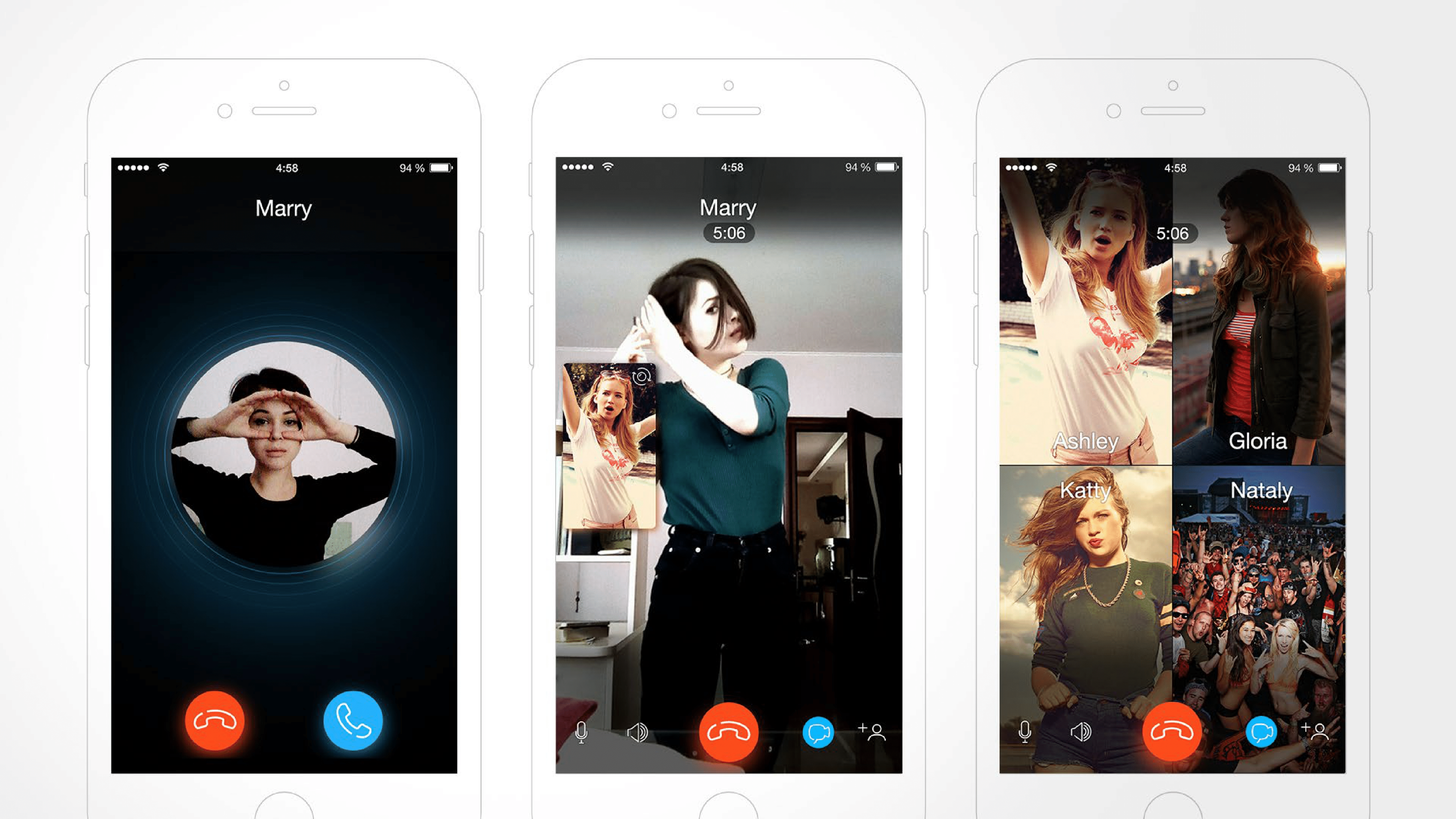
Video calls
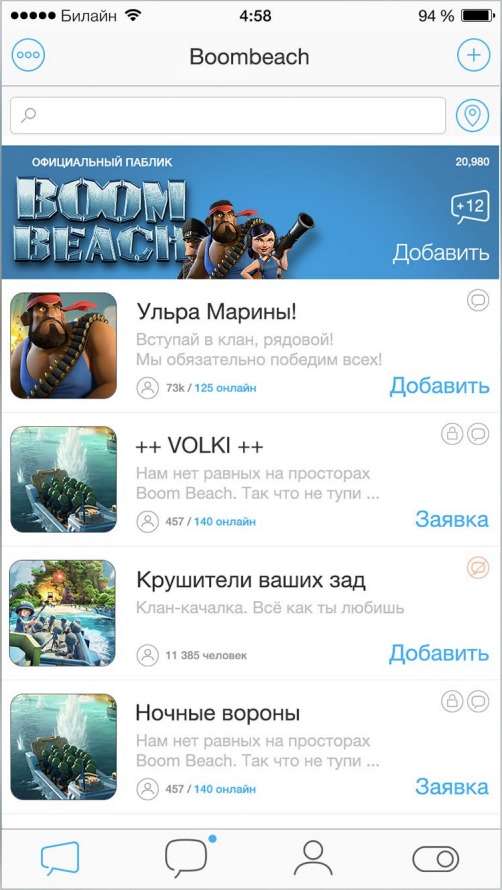
Advanced public channels* 2016!
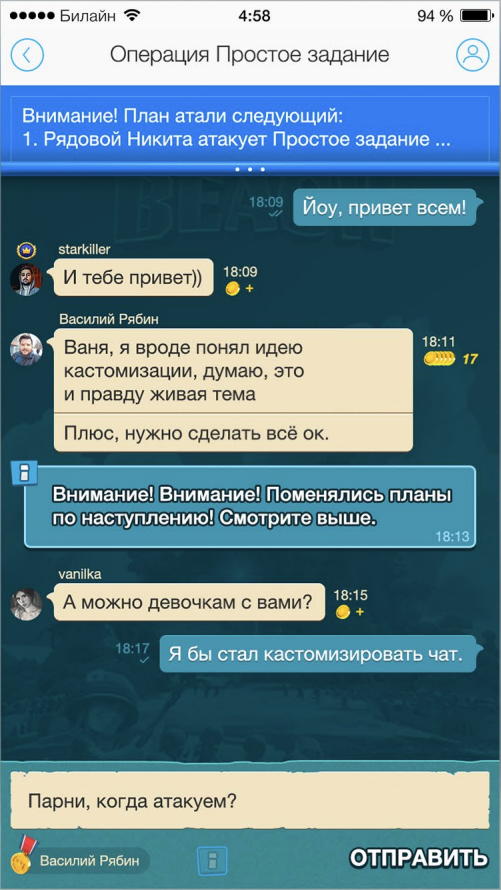
Public channel customization* 2016!
© Alexander Zykow, 2026
Next Case Happy Delivery →



AnyTalk, 2016
Context
AnyTalk is a cross-platform messenger designed for private communication, targeting users who prioritize data security and connection stability: distributed teams, business users, and a privacy-conscious audience.The product challenge was to combine a high level of data protection with a simple, familiar messaging UX.
Role
Product / UX Designer with elements of design leadership:
- Defined core user scenarios and overall UX strategy
- Aligned user needs, business goals, and technical constraints
- Prioritized features in collaboration with the Product Manager
- Facilitated communication between design, engineering, and stakeholders
- Contributed to resource planning and delivery timelines
Chat list with group chats
Group chat
Live location sharing 2016!
Approach
1. Research
At the outset, I conducted an in-depth analysis of native messaging UX patterns to lower the entry barrier and ensure interface predictability.
This included:
- Competitive benchmarking of market leaders
- Analysis of established chat, calling, and group communication models
- Identifying user expectations for secure messengers
Special attention was given to Telegram as a key competitor at the time — its patterns set a high standard for speed, interface clarity, and user control.
2. UX Concept
One of the core challenges was rethinking complex functionality around cryptographic key exchange.
- Simplified the interaction model for key management
- Redesigned security status indicators
- Made chat states transparent and easily scannable
- Removed unnecessary technical terminology from the user layer
As a result, security felt like an inherent product property rather than a separate, complicated process.
3. Key Features
- End-to-end encryption (AES-256, ATLS, SSL) for private and group chats
- Private and group video calls, redesigned using best-in-class UX practices that remain relevant today (low-friction call entry, clear connection states, stable group scenarios)
- Watch-Together synchronous video viewing
Pinned messages
* 2016!
Media handling optimized for usabilityBottom States
Bottom-first interaction model* 2016!
Watch-Together: Synchronous Video Viewing
Our team took the feature from idea and pitch to release in 2016 — effectively six months before similar scenarios began appearing in major products. The market later validated the demand for this format.
AnyVideo streaming, 2017
Watch Together, Meta* 2018
* restricted in Russia
YouTube Premier, 2019
Amazon Theatre, 2020
Apple Screen Share, 2021
The flow was intentionally simple:Drop a link into the chat → start synchronized playback → the session becomes a pinned, joinable message that anyone can enter at any time.
My Key Contribution
I initiated and designed the synchronous video viewing feature.
At the time, this was not a trend — it was a hypothesis that messengers would evolve into spaces for shared digital experiences, not just text communication.
Product Concept
We aimed for maximum simplicity:
User sends a link → starts synchronized playback → the session is pinned in the chat as a joinable message.
No complex rooms. No setup friction. No barriers to entry.Minimal friction — maximum togetherness.
Why It Mattered
- Increased the messenger’s social value
- Boosted engagement and session duration
- Created natural re-engagement loops
- Reinforced marketing positioning around live interaction and shared experiences
- Differentiated the product from purely utilitarian secure messengers
In essence, we transformed a communication tool into a space for shared presence.
Execution
What made this especially meaningful was that the feature was implemented within just a few sprints — thanks to tight alignment between design and engineering and a shared belief in the feature’s value.
It was a case where the team didn’t just execute tasks — we shared a product vision.
I’m sincerely grateful to the engineers who made this possible and turned the concept into a real experience:
Yan RobovikDmitry TolstoyDmitry Tyagniy
This is one of those projects where, years later, you can confidently say: we built something we’re genuinely proud of.
And much more...
Video calls
Advanced public channels* 2016!
Public channel customization* 2016!
© Alexander Zykow, 2026
Next Case Happy Delivery →
AnyTalk, 2016
Context
AnyTalk is a cross-platform messenger designed for private communication, targeting users who prioritize data security and connection stability: distributed teams, business users, and a privacy-conscious audience.The product challenge was to combine a high level of data protection with a simple, familiar messaging UX.
Role
Product / UX Designer with elements of design leadership:
- Defined core user scenarios and overall UX strategy
- Aligned user needs, business goals, and technical constraints
- Prioritized features in collaboration with the Product Manager
- Facilitated communication between design, engineering, and stakeholders
- Contributed to resource planning and delivery timelines
Chat list with group chats
Group chat
Live location sharing 2016!
Approach
1. Research
At the outset, I conducted an in-depth analysis of native messaging UX patterns to lower the entry barrier and ensure interface predictability.
This included:
- Competitive benchmarking of market leaders
- Analysis of established chat, calling, and group communication models
- Identifying user expectations for secure messengers
Special attention was given to Telegram as a key competitor at the time — its patterns set a high standard for speed, interface clarity, and user control.
2. UX Concept
One of the core challenges was rethinking complex functionality around cryptographic key exchange.
- Simplified the interaction model for key management
- Redesigned security status indicators
- Made chat states transparent and easily scannable
- Removed unnecessary technical terminology from the user layer
As a result, security felt like an inherent product property rather than a separate, complicated process.
3. Key Features
- End-to-end encryption (AES-256, ATLS, SSL) for private and group chats
- Private and group video calls, redesigned using best-in-class UX practices that remain relevant today (low-friction call entry, clear connection states, stable group scenarios)
- Watch-Together synchronous video viewing
Pinned messages
* 2016!
Media handling optimized for usabilityBottom States
Bottom-first interaction model* 2016!
Watch-Together: Synchronous Video Viewing
Our team took the feature from idea and pitch to release in 2016 — effectively six months before similar scenarios began appearing in major products. The market later validated the demand for this format.
AnyVideo streaming, 2017
Watch Together, Meta* 2018
* restricted in Russia
YouTube Premier, 2019
Amazon Theatre, 2020
Apple Screen Share, 2021
The flow was intentionally simple:Drop a link into the chat → start synchronized playback → the session becomes a pinned, joinable message that anyone can enter at any time.
My Key Contribution
I initiated and designed the synchronous video viewing feature.
At the time, this was not a trend — it was a hypothesis that messengers would evolve into spaces for shared digital experiences, not just text communication.
Product Concept
We aimed for maximum simplicity:
User sends a link → starts synchronized playback → the session is pinned in the chat as a joinable message.
No complex rooms. No setup friction. No barriers to entry.Minimal friction — maximum togetherness.
Why It Mattered
- Increased the messenger’s social value
- Boosted engagement and session duration
- Created natural re-engagement loops
- Reinforced marketing positioning around live interaction and shared experiences
- Differentiated the product from purely utilitarian secure messengers
In essence, we transformed a communication tool into a space for shared presence.
Execution
What made this especially meaningful was that the feature was implemented within just a few sprints — thanks to tight alignment between design and engineering and a shared belief in the feature’s value.
It was a case where the team didn’t just execute tasks — we shared a product vision.
I’m sincerely grateful to the engineers who made this possible and turned the concept into a real experience:
Yan RobovikDmitry TolstoyDmitry Tyagniy
This is one of those projects where, years later, you can confidently say: we built something we’re genuinely proud of.
And much more...
Video calls
Advanced public channels* 2016!
Public channel customization* 2016!
© Alexander Zykow, 2026
Next Case Happy Delivery →
AnyTalk, 2016
Context
AnyTalk is a cross-platform messenger designed for private communication, targeting users who prioritize data security and connection stability: distributed teams, business users, and a privacy-conscious audience.The product challenge was to combine a high level of data protection with a simple, familiar messaging UX.
Role
Product / UX Designer with elements of design leadership:
- Defined core user scenarios and overall UX strategy
- Aligned user needs, business goals, and technical constraints
- Prioritized features in collaboration with the Product Manager
- Facilitated communication between design, engineering, and stakeholders
- Contributed to resource planning and delivery timelines
Chat list with group chats
Group chat
Live location sharing 2016!
Approach
1. Research
At the outset, I conducted an in-depth analysis of native messaging UX patterns to lower the entry barrier and ensure interface predictability.
This included:
- Competitive benchmarking of market leaders
- Analysis of established chat, calling, and group communication models
- Identifying user expectations for secure messengers
Special attention was given to Telegram as a key competitor at the time — its patterns set a high standard for speed, interface clarity, and user control.
2. UX Concept
One of the core challenges was rethinking complex functionality around cryptographic key exchange.
- Simplified the interaction model for key management
- Redesigned security status indicators
- Made chat states transparent and easily scannable
- Removed unnecessary technical terminology from the user layer
As a result, security felt like an inherent product property rather than a separate, complicated process.
3. Key Features
- End-to-end encryption (AES-256, ATLS, SSL) for private and group chats
- Private and group video calls, redesigned using best-in-class UX practices that remain relevant today (low-friction call entry, clear connection states, stable group scenarios)
- Watch-Together synchronous video viewing
Pinned messages
* 2016!
Media handling optimized for usabilityBottom States
Bottom-first interaction model* 2016!
Watch-Together: Synchronous Video Viewing
Our team took the feature from idea and pitch to release in 2016 — effectively six months before similar scenarios began appearing in major products. The market later validated the demand for this format.
AnyVideo streaming, 2017
Watch Together, Meta* 2018
* restricted in Russia
YouTube Premier, 2019
Amazon Theatre, 2020
Apple Screen Share, 2021
The flow was intentionally simple:Drop a link into the chat → start synchronized playback → the session becomes a pinned, joinable message that anyone can enter at any time.
My Key Contribution
I initiated and designed the synchronous video viewing feature.
At the time, this was not a trend — it was a hypothesis that messengers would evolve into spaces for shared digital experiences, not just text communication.
Product Concept
We aimed for maximum simplicity:
User sends a link → starts synchronized playback → the session is pinned in the chat as a joinable message.
No complex rooms. No setup friction. No barriers to entry.Minimal friction — maximum togetherness.
Why It Mattered
- Increased the messenger’s social value
- Boosted engagement and session duration
- Created natural re-engagement loops
- Reinforced marketing positioning around live interaction and shared experiences
- Differentiated the product from purely utilitarian secure messengers
In essence, we transformed a communication tool into a space for shared presence.
Execution
What made this especially meaningful was that the feature was implemented within just a few sprints — thanks to tight alignment between design and engineering and a shared belief in the feature’s value.
It was a case where the team didn’t just execute tasks — we shared a product vision.
I’m sincerely grateful to the engineers who made this possible and turned the concept into a real experience:
Yan RobovikDmitry TolstoyDmitry Tyagniy
This is one of those projects where, years later, you can confidently say: we built something we’re genuinely proud of.
And much more...
Video calls
Advanced public channels* 2016!
Public channel customization* 2016!
© Alexander Zykow, 2026
Next Case Happy Delivery →
AnyTalk, 2016
Context
AnyTalk is a cross-platform messenger designed for private communication, targeting users who prioritize data security and connection stability: distributed teams, business users, and a privacy-conscious audience.The product challenge was to combine a high level of data protection with a simple, familiar messaging UX.
Role
Product / UX Designer with elements of design leadership:
- Defined core user scenarios and overall UX strategy
- Aligned user needs, business goals, and technical constraints
- Prioritized features in collaboration with the Product Manager
- Facilitated communication between design, engineering, and stakeholders
- Contributed to resource planning and delivery timelines
Chat list with group chats
Group chat
Live location sharing 2016!
Approach
1. Research
At the outset, I conducted an in-depth analysis of native messaging UX patterns to lower the entry barrier and ensure interface predictability.
This included:
- Competitive benchmarking of market leaders
- Analysis of established chat, calling, and group communication models
- Identifying user expectations for secure messengers
Special attention was given to Telegram as a key competitor at the time — its patterns set a high standard for speed, interface clarity, and user control.
2. UX Concept
One of the core challenges was rethinking complex functionality around cryptographic key exchange.
- Simplified the interaction model for key management
- Redesigned security status indicators
- Made chat states transparent and easily scannable
- Removed unnecessary technical terminology from the user layer
As a result, security felt like an inherent product property rather than a separate, complicated process.
3. Key Features
- End-to-end encryption (AES-256, ATLS, SSL) for private and group chats
- Private and group video calls, redesigned using best-in-class UX practices that remain relevant today (low-friction call entry, clear connection states, stable group scenarios)
- Watch-Together synchronous video viewing
Pinned messages
* 2016!
Media handling optimized for usabilityBottom States
Bottom-first interaction model* 2016!
Watch-Together: Synchronous Video Viewing
Our team took the feature from idea and pitch to release in 2016 — effectively six months before similar scenarios began appearing in major products. The market later validated the demand for this format.
AnyVideo streaming, 2017
Watch Together, Meta* 2018
* restricted in Russia
YouTube Premier, 2019
Amazon Theatre, 2020
Apple Screen Share, 2021
The flow was intentionally simple:Drop a link into the chat → start synchronized playback → the session becomes a pinned, joinable message that anyone can enter at any time.
My Key Contribution
I initiated and designed the synchronous video viewing feature.
At the time, this was not a trend — it was a hypothesis that messengers would evolve into spaces for shared digital experiences, not just text communication.
Product Concept
We aimed for maximum simplicity:
User sends a link → starts synchronized playback → the session is pinned in the chat as a joinable message.
No complex rooms. No setup friction. No barriers to entry.Minimal friction — maximum togetherness.
Why It Mattered
- Increased the messenger’s social value
- Boosted engagement and session duration
- Created natural re-engagement loops
- Reinforced marketing positioning around live interaction and shared experiences
- Differentiated the product from purely utilitarian secure messengers
In essence, we transformed a communication tool into a space for shared presence.
Execution
What made this especially meaningful was that the feature was implemented within just a few sprints — thanks to tight alignment between design and engineering and a shared belief in the feature’s value.
It was a case where the team didn’t just execute tasks — we shared a product vision.
I’m sincerely grateful to the engineers who made this possible and turned the concept into a real experience:
Yan RobovikDmitry TolstoyDmitry Tyagniy
This is one of those projects where, years later, you can confidently say: we built something we’re genuinely proud of.
And much more...
Video calls
Advanced public channels* 2016!
Public channel customization* 2016!
© Alexander Zykow, 2026
Next Case Happy Delivery →